 Cookies
Potřebujeme váš souhlas k využití jednotlivých dat, aby se vám mimo jiné mohly ukazovat informace týkající se vašich zájmů. Souhlas udělíte kliknutím na tlačítko „OK“.
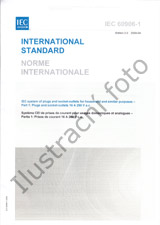

IEC 61249-2-27-ed.1.0
Materials for printed boards and other interconnecting structures - Part 2-27: Reinforced base materials clad and unclad - Bismaleimide/triazine modified with non-halogenated epoxide woven glass laminate sheets of defined flammability (vertical burning test), copper-clad
Automaticky přeložený název:
Materiály pro desky s plošnými spoji a další propojovací struktury - Část 2-27: Vyztužené základní materiály, oděná a neoděný - bismaleinimid / triazinem modifikované nehalogenovaného epoxidových tkané sklolaminát listů s definovanou hořlavostí (zkouška vertikálního hoření), měděné
NORMA vydána dne 29.11.2012
Informace o normě:
Označení normy: IEC 61249-2-27-ed.1.0
Datum vydání normy: 29.11.2012
Kód zboží: NS-412909
Počet stran: 41
Přibližná hmotnost: 123 g (0.27 liber)
Země: Mezinárodní technická norma
Kategorie: Technické normy IEC
Kategorie - podobné normy:
Anotace textu normy IEC 61249-2-27-ed.1.0 :
IEC 61249-2-27:2012 gives requirements for properties of bismaleimide/triazine modified with non-halogenated epoxide woven E-glass reinforced laminated sheets of defined flammability (vertical burning test), copper-clad in thicknesses of 0,03 mm up to 1,60 mm. The flammability rating is achieved through the use of non-halogenated inorganic and/or organic compounds acting as fire retardants. These fire retardants are contained as part of polymeric structure or in addition to it. The glass transition temperature is defined to be 160 °C minimum. La CEI 61249-2-27:2012 fournit les exigences relatives aux proprietes des feuilles stratifiees renforcees en tissu de verre de type E epoxyde non-halogene modifie, et bismaleimide-triazine, dinflammabilite definie (essai de combustion verticale), plaquees cuivre depaisseurs comprises entre 0,03 mm et 1,60 mm. Les caracteristiques dinflammabilite sont obtenues par lutilisation de composes non halogenes inorganiques et/ou organiques servant dignifuges. Ces ignifuges font partie de la structure polymere ou sont contenus en plus de celle-ci. La temperature de transition vitreuse est definie comme etant de 160 °C au minimum.
Podobné normy:
27.11.2008
29.11.2012
19.12.2001
29.11.2012
21.4.2010
21.4.2010
Doporučujeme:

Aktualizace zákonů
Chcete mít jistotu o platnosti užívaných předpisů?
Nabízíme Vám řešení, abyste mohli používat stále platné (aktuální) legislativní předpisy.
Chcete vědět více informací? Podívejte se na tuto stránku.